
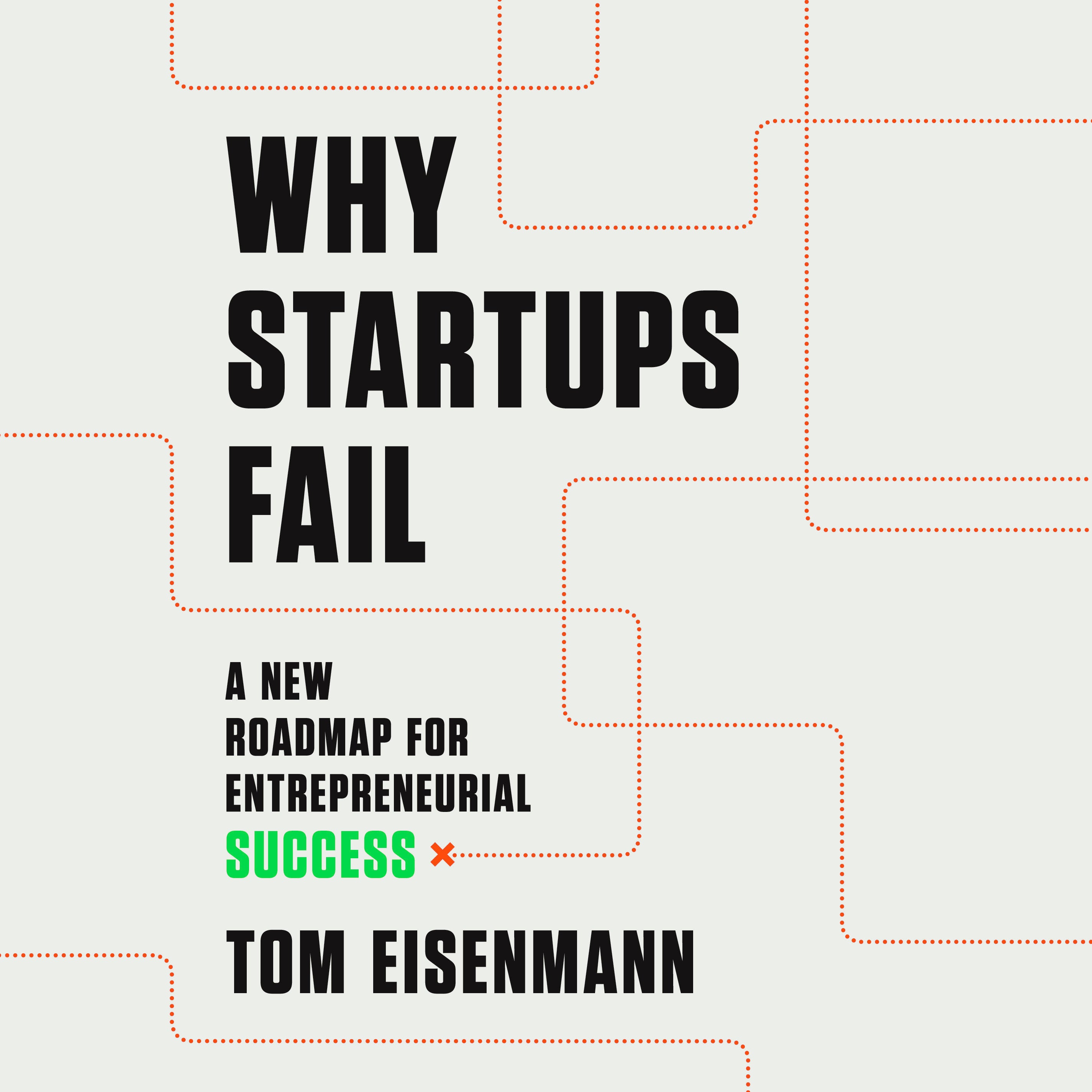
Why Startups Fail
Read by
Robert Fass
Release:
03/30/2021
Runtime:
10h 53m
Unabridged
Quantity:
Launching and scaling a startup is like a game of chess: It requires laser focus, relentless prioritization, and contingency strategies galore. I’ve always wished there was a guidebook to help entrepreneurs avoid common pitfalls on their way to wherever they’re headed. Eisenmann has truly helped illuminated a path to success by shining a spotlight on common startup failure patterns. His insights are invaluable, whether you’re just getting started, or you’re eyeing your endgame.
Jenn Hyman, co-founder and CEO, Rent the Runway
If you want your startup to succeed, you need to understand why startups fail.
“Whether you’re a first-time founder or looking to bring innovation into a corporate environment, Why Startups Fail is essential reading.”—Eric Ries, founder and CEO, LTSE, and New York Times bestselling author of The Lean Startup and The Startup Way
Why do startups fail? That question caught Harvard Business School professor Tom Eisenmann by surprise when he realized he couldn’t answer it.
So he launched a multiyear research project to find out. In Why Startups Fail, Eisenmann reveals his findings: six distinct patterns that account for the vast majority of startup failures.
• Bad Bedfellows. Startup success is thought to rest largely on the founder’s talents and instincts. But the wrong team, investors, or partners can sink a venture just as quickly.
• False Starts. In following the oft-cited advice to “fail fast” and to “launch before you’re ready,” founders risk wasting time and capital on the wrong solutions.
• False Promises. Success with early adopters can be misleading and give founders unwarranted confidence to expand.
• Speed Traps. Despite the pressure to “get big fast,” hypergrowth can spell disaster for even the most promising ventures.
• Help Wanted. Rapidly scaling startups need lots of capital and talent, but they can make mistakes that leave them suddenly in short supply of both.
• Cascading Miracles. Silicon Valley exhorts entrepreneurs to dream big. But the bigger the vision, the more things that can go wrong.
Drawing on fascinating stories of ventures that failed to fulfill their early promise—from a home-furnishings retailer to a concierge dog-walking service, from a dating app to the inventor of a sophisticated social robot, from a fashion brand to a startup deploying a vast network of charging stations for electric vehicles—Eisenmann offers frameworks for detecting when a venture is vulnerable to these patterns, along with a wealth of strategies and tactics for avoiding them.
A must-listen for founders at any stage of their entrepreneurial journey, Why Startups Fail is not merely a guide to preventing failure but also a roadmap charting the path to startup success.
* This audiobook includes a downloadable PDF of the book’s Appendix consisting of An Early-Stage Startup Survey.
“Whether you’re a first-time founder or looking to bring innovation into a corporate environment, Why Startups Fail is essential reading.”—Eric Ries, founder and CEO, LTSE, and New York Times bestselling author of The Lean Startup and The Startup Way
Why do startups fail? That question caught Harvard Business School professor Tom Eisenmann by surprise when he realized he couldn’t answer it.
So he launched a multiyear research project to find out. In Why Startups Fail, Eisenmann reveals his findings: six distinct patterns that account for the vast majority of startup failures.
• Bad Bedfellows. Startup success is thought to rest largely on the founder’s talents and instincts. But the wrong team, investors, or partners can sink a venture just as quickly.
• False Starts. In following the oft-cited advice to “fail fast” and to “launch before you’re ready,” founders risk wasting time and capital on the wrong solutions.
• False Promises. Success with early adopters can be misleading and give founders unwarranted confidence to expand.
• Speed Traps. Despite the pressure to “get big fast,” hypergrowth can spell disaster for even the most promising ventures.
• Help Wanted. Rapidly scaling startups need lots of capital and talent, but they can make mistakes that leave them suddenly in short supply of both.
• Cascading Miracles. Silicon Valley exhorts entrepreneurs to dream big. But the bigger the vision, the more things that can go wrong.
Drawing on fascinating stories of ventures that failed to fulfill their early promise—from a home-furnishings retailer to a concierge dog-walking service, from a dating app to the inventor of a sophisticated social robot, from a fashion brand to a startup deploying a vast network of charging stations for electric vehicles—Eisenmann offers frameworks for detecting when a venture is vulnerable to these patterns, along with a wealth of strategies and tactics for avoiding them.
A must-listen for founders at any stage of their entrepreneurial journey, Why Startups Fail is not merely a guide to preventing failure but also a roadmap charting the path to startup success.
* This audiobook includes a downloadable PDF of the book’s Appendix consisting of An Early-Stage Startup Survey.
Release:
2021-03-30
Runtime:
10h 53m
Format:
audio
Weight:
0.0 lb
Language:
English
ISBN:
9780593170038
Publisher:
Penguin Random House
Praise