
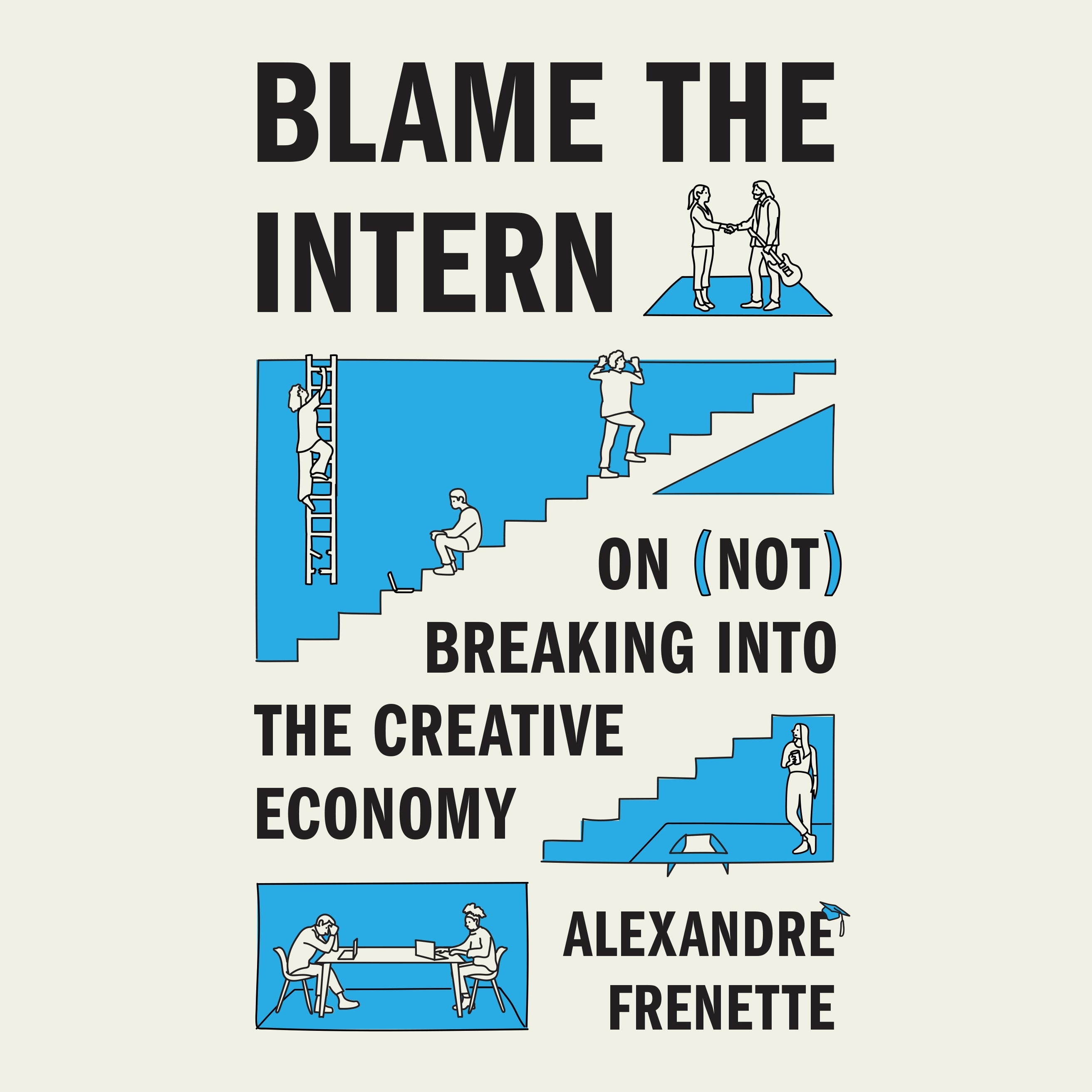
Blame the Intern
“A compelling and incisive illumination of the music industry’s ambiguous terrain. Through vivid analysis, this work reveals how interns, educators, and established professionals negotiate the uncertain and often contradictory pathways of creative labor in today’s cultural economy. A must-read for people interested in arts, cultural industries, and education.”
Claudio E. Benzecry, author of The Perfect Fit: Creative Work in the Global Shoe Industry
While generations of young adults used to spend their summers working as lifeguards or camp counselors, college students today are more likely to seek office experience as interns. Blame the Intern takes listeners into the workspaces of the music industry to show how internships, especially unpaid ones, are problematic introductions to the working world that often provide little valuable training and are unlikely to lead to a job.
Since the 1980s, shifts in labor markets and careers have made employers less prone to invest in training entry-level employees who may quickly change jobs anyway. In recent decades, higher education has filled the gap, fueling an explosive growth of internships to facilitate the transition from college to a career. Drawing on in-depth interviews with interns, record label employees, and college personnel, as well as his own experiences as an unpaid intern at two music industry firms in New York City, Alexandre Frenette sheds light on who benefits from the intern economy, who suffers, and why. He finds that internships are rife with ambiguity because employers are neither trained nor greatly rewarded to mentor and colleges are ill-equipped to provide workplace guidance. As a result, there is little consensus about what interns should be doing or what benefits they should be gaining from their experience, which can often lead to inequality, exploitation, and disappointment.
Timely and provocative, Blame the Intern demonstrates how employers and institutions of higher learning are redefining what it means to break in-and reveals what happens when few can.